The importance of woodland management
For some, felling trees can conjure up negative images of rainforest clearance or habitat destruction. In reality, sympathetic woodland management brings many ecological benefits as well as increases the value of our most precious ecosystem.
It is hard to overstate the importance of timber production when talking about managing woodlands. Here in the UK, we import more timber than any other country, except for China. Whether a woodland is managed for timber, biodiversity or recreation, it is vital to plan your approach to management carefully.

Why intervene at all?
Let’s imagine you are now in charge of a piece of woodland. You lucky thing! As a big fan of wildlife, your main objective might be to make your woodland be the best habitat possible. Well, what could be more natural than a woodland? Why does nature need our management? Closing the gate and letting the woods do its thing is a management choice in itself – you may hear it being called ‘non-intervention’. This technique has its place in forestry, but it‘s not optimal if your goal is habitat improvement. Drawbacks of widespread non-intervention can include certain plants and animals disappearing due to woodland structure change, excessive invasive species taking hold (eg rhododendron), or reduced chance of natural regeneration.
Every piece of woodland in the UK has in fact had some form of human intervention, even our most ancient woodlands. It may seem counter-intuitive, but over thousands of years, the interactions between plants, animals and humans will often create greater diversity than would be found otherwise.
How can wildlife be protected?
A reduction in active woodland management has been identified as a major reason for the decline in many bird species.
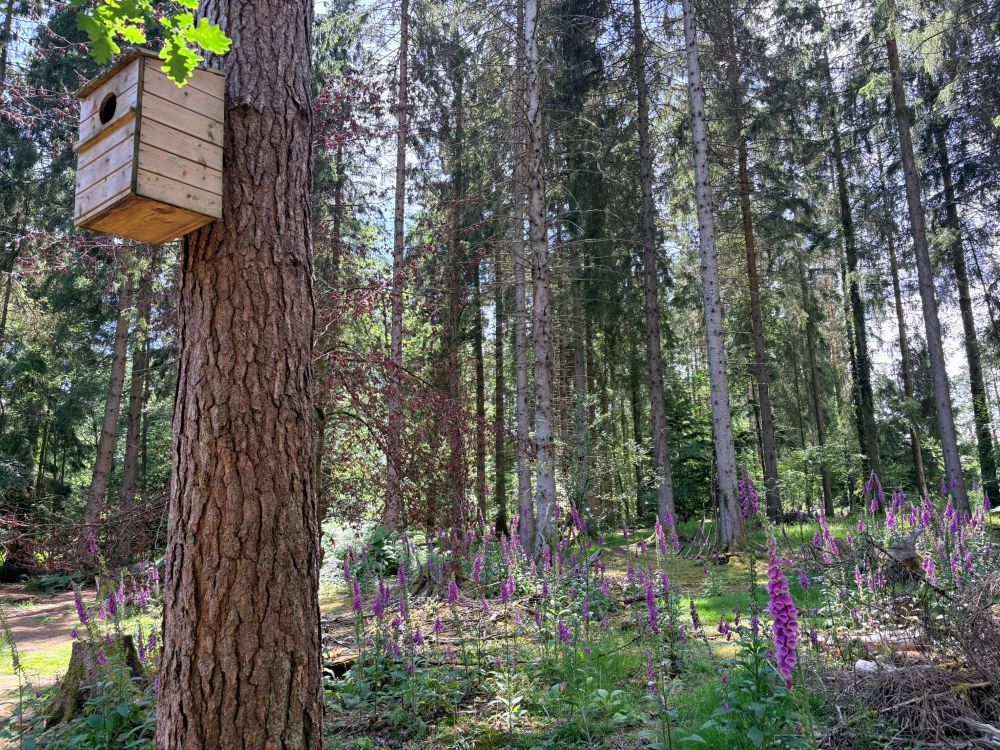
Many different forms of management will increase the potential for biodiversity. One method is coppicing, creating areas of open space as well as a multi-layered structure, as birds thrive in woodlands which have both large and small trees. You can also maintain deadwood and old trees full of holes, providing great nesting spaces, and conifers within broadleaved woodland offer winter shelter.
Mammals of all sizes thrive in a variety of different woodland structures. Many are dependent on having ground cover for ease of movement, while some benefit from well-maintained woodland edges or the presence of winding rides. Bats rely on woodland, and maintaining a well-developed understorey, retaining deadwood or veteran trees will support their roosting and foraging.

Invertebrates are most integral to the woodland ecosystem, bringing many benefits to woodland soils and are a key food source for other inhabitants. Help them thrive with log piles and conservation of deadwood.
Flowering plants, ferns, mosses, algae, lichens and fungi also call woodlands home. Many have high conservation value and often more abundant in well-managed woodlands.
There are also many wildlife species that can harm our woodlands, too many to name here, all affecting different trees with different levels of severity.
Managing woodlands involves identifying these threats and developing plans to mitigate them. This could mean population control of invasive species, or increasing tree diversity to build resilience.

Why remove trees?
Woodland in the UK is facing heavy pressure from both living and abiotic threats like climate change – which is unlikely to improve any time soon.
Often, an unmanaged woodland will need thinning: removing a proportion of trees within a woodland to let in more light and give trees more space to grow. Often woodlands are planted at 2000–4000 trees per hectare, whereas a mature woodland might only have around 300 stems per hectare. The first thinning should take place when trees are around 10-20 years old, with subsequent felling at various intervals throughout the woodland’s lifespan. Knowing when and what to thin is a fine art, and foresters have tools at their disposal to keep the process optimal.
Not only can thinning diversify forest structure to help wildlife, but it can also make the forest more resilient against extreme weather. The other result of well-timed thinning is of course, high quality and valuable timber.

We have comparatively low forest cover in the UK, but we do have more ancient trees than all of Europe combined. You may have ancient or veteran trees in your woodland which deserve particularly close care. One method of ensuring longevity of these trees is ‘halo-thinning’. This practice involves carefully clearing space around the veteran trees to allow more light to reach them, helping them and all the life that they support to flourish.
Improving infrastructure should be high on your to-do list too. Good quality roads and turning areas will allow the machinery required to extract timber to be far more efficient and cause far less compaction, protecting your soil as you go.
Helping woodland to regenerate is crucial for an ecosystem that will thrive long-term. This can be achieved through enriching the woodland with additional tree planting, or creating open spaces and protecting naturally regenerated seedlings.

Where can I start?
The first step to sustainable woodland management should be preparing a Woodland Management Plan (WMP). This usually is written in a standard template provided by the Forestry Commission, and outlines your vision, objectives and plans for operations. Having a WMP is also essential to obtain a felling license and to access some grants.
If you have a woodland and are interested in starting your journey towards sustainable management, help is available from the Western Forest with our completely free service. We’ll work alongside you, offering advice, options, sorting the paperwork and a WMP.
It all starts with a conversation with our team. We’re looking forward to hearing more about your land and what would work for you and your business. Find out more on our Woodland Management page.

Related Projects


Stay connected
Subscribe to the Western Forest newsletter to hear about our progress, partner projects, events and volunteer opportunities.